
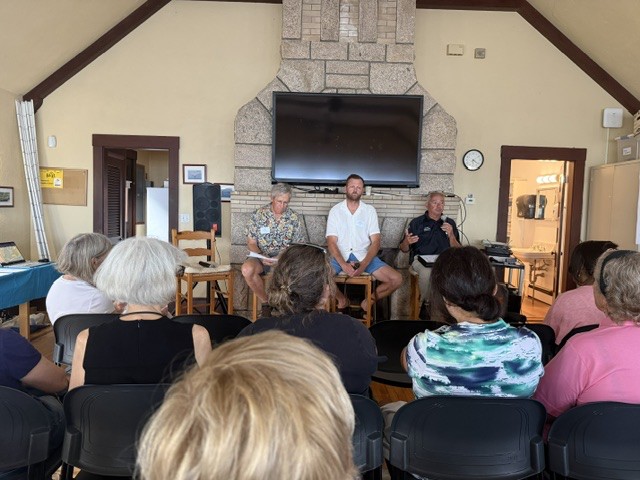
About 60 members and neighbors filled the Boathouse at the Waquoit Bay National Estuarine Research Reserve on Thursday evening, August 6, for CPWB’s 2026 Annual Meeting. It was a full house. Many thanks to the Reserve for hosting us.
The evening’s panel looked at the shellfish programs run by the Towns of Falmouth and Mashpee and by the Mashpee Wampanoag Tribe’s First Light shellfish farm. Panelists covered the history, goals, challenges and future plans of oyster and quahog seeding and wild reef restoration around the Bay. Speakers included Chris Avis, Mashpee Shellfish Constable, and Chuck Martinsen, Deputy Director of Falmouth Marine & Environmental Services. Tom Duncan of Falmouth’s Water Quality Management Committee and Shellfish Advisory Committee moderated.
What it means for the Bay
Shellfish filter the water as they feed and store nitrogen in their shells and tissue. When they are harvested, that nitrogen leaves the Bay with them. That’s why Cape towns now count aquaculture in their nitrogen plans, alongside sewers and better septic systems. Healthy shellfish beds are one part of how Waquoit Bay recovers, alongside addressing wastewater.
CPWB updates
The meeting was also a chance to report on the Storm Drain Project. As of the meeting, 55 volunteers had adopted 129 drains, and a demo table showed how the adoption tool works. CPWB also announced its next focus: building support for the next round of funding for Mashpee’s Phase 3 sewers, which are aimed at Waquoit Bay. That work follows this spring’s design funding vote.
Thank you to our panelists and moderator, to everyone who came, and to the volunteers who brought food and set up. A bigger membership gives Waquoit Bay a louder voice. Become a member, or adopt a storm drain near you.
Drafted with AI assistance from the linked source.


